
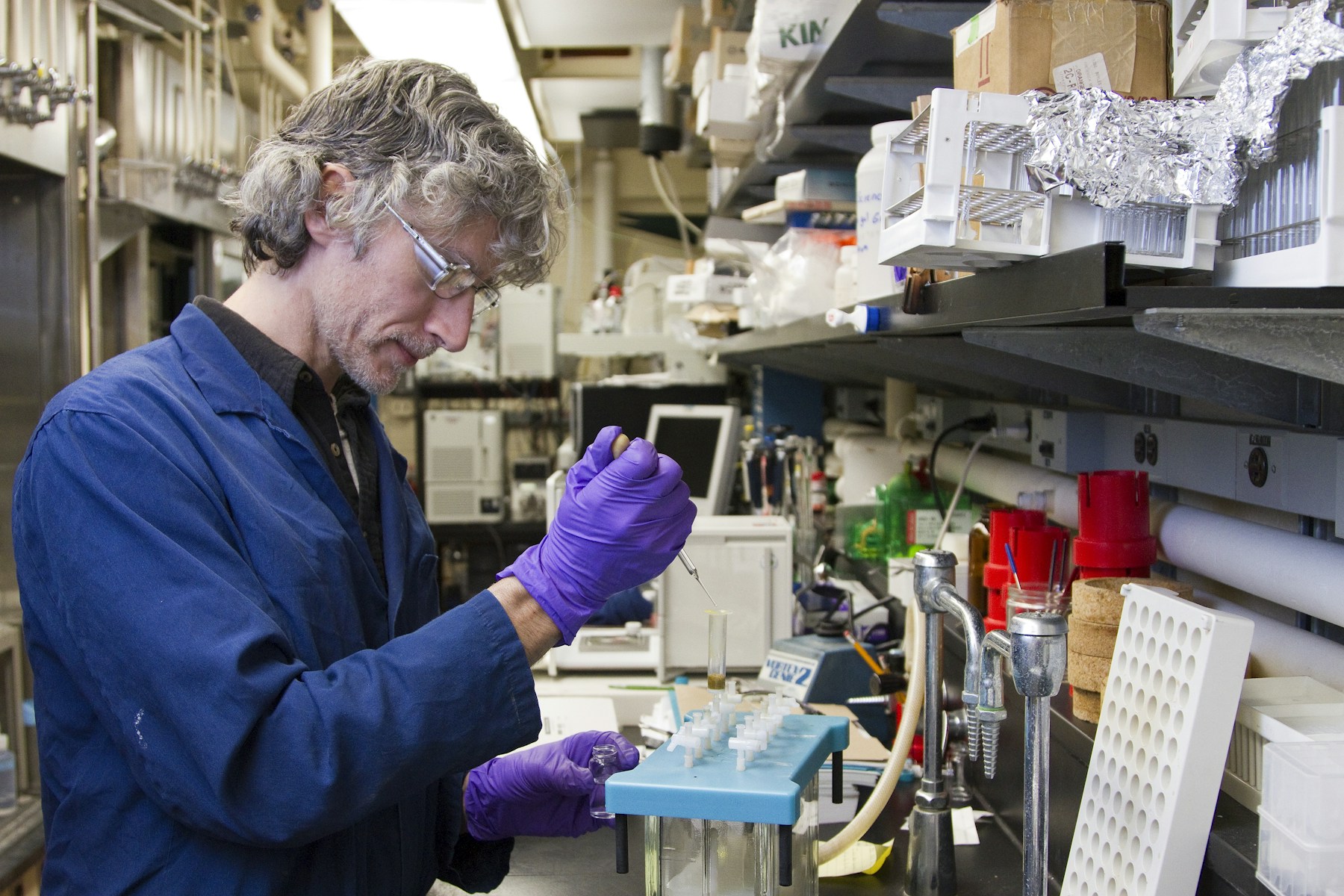
Photo: National Cancer Institute / Unsplash
Urine Sample
Collection
A clear procedure from notification to sealing and analysis. Know who conducts testing, what a suitable sample requires and what to expect throughout collection.
Who can authorise a test?
Testing is conducted by authorised personnel on behalf of an organisation with testing authority.
Minimum urine volume
The officer checks both the volume and concentration of the sample.
Specific gravity requirements
The following thresholds apply when measured with a refractometer.
| Urine volume | Minimum specific gravity |
|---|---|
| 90 mL to less than 150 mL | ≥ 1.005 |
| 150 mL or more | ≥ 1.003 |
For a volume of 90 mL to less than 150 mL, laboratory strips require a reading of at least 1.010. The 1.003 threshold for 150 mL or more applies to refractometer readings only.
The testing process
Nine stages explain how the sample is collected, secured and sent for analysis.
- Step 01
Doping control
Testing takes place under an authorised anti-doping programme, in-competition or out-of-competition.
- Step 02
Athlete selection
You are notified of selection, shown official identification and informed of the required sample. Acknowledge the notification as instructed.
- Step 03
Report to the station
Report immediately to the Doping Control Station unless a permitted delay is approved. Remain under observation.
- Step 04
Choose the equipment
Select a collection vessel. Check that the packaging is sealed and intact, and raise any concern with the officer.
- Step 05
Provide the sample
Provide your first urine after notification under direct observation by an authorised witness of the same gender.
- Step 06
Split the sample
Check the A and B kit codes, then divide the sample as directed. Leave a small amount for the officer's specific gravity check.
- Step 07
Seal the samples
Seal the A and B bottles as instructed. The officer checks that they are securely closed.
- Step 08
Complete the form
Review the Doping Control Form, record any comments and sign it. Keep your copy or digital record.
- Step 09
The analysis
The sealed, coded sample is securely transported to a WADA-accredited laboratory for analysis.
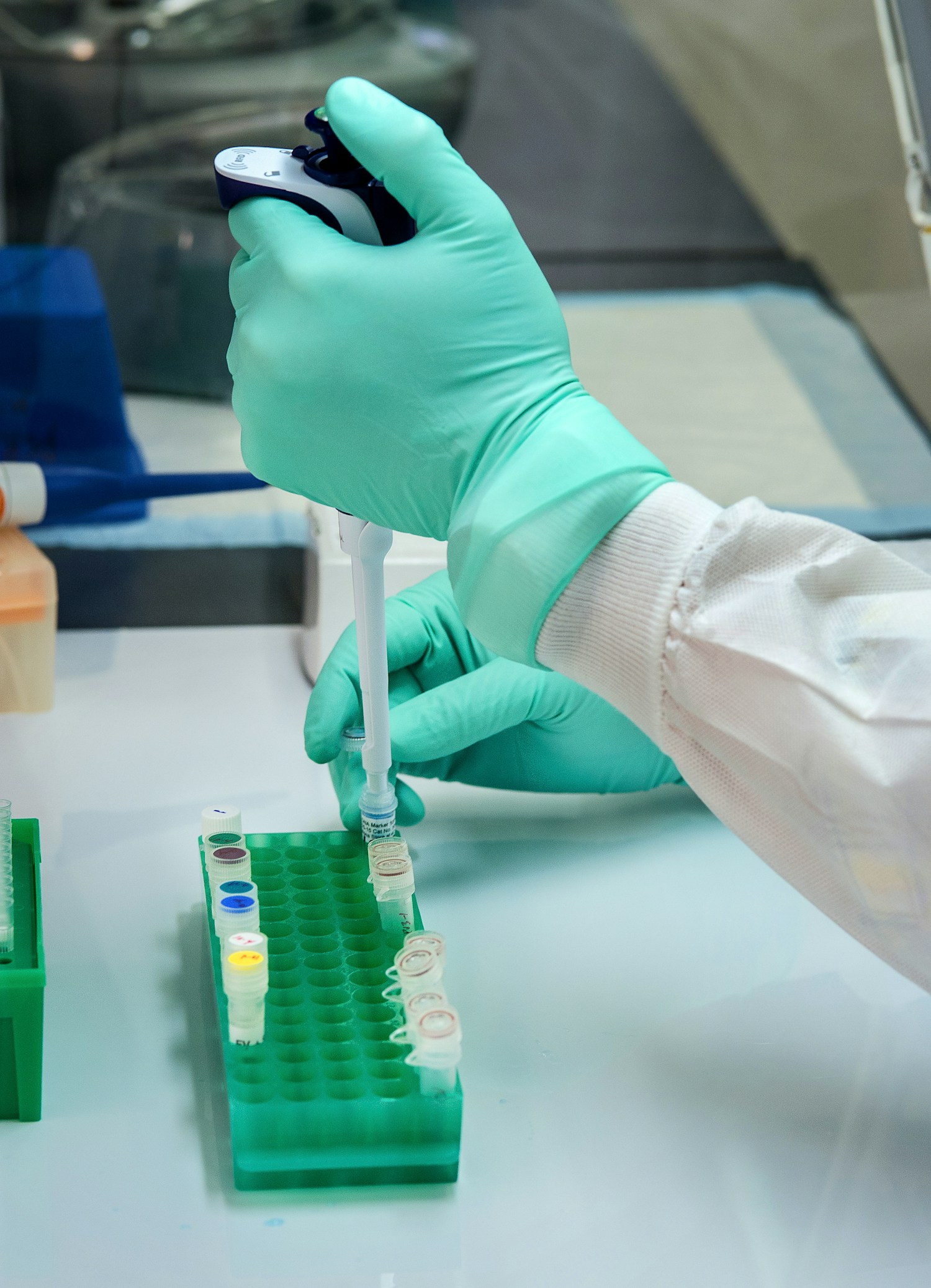
Photo: CDC / Unsplash
Your sample stays identifiable by code.
Sample codes connect the sealed bottles to the collection record. Documentation sent to the laboratory does not include information identifying you.
Your rights & responsibilities
Ask for clarification whenever you need it. You should understand the procedure throughout collection.
Your rights
- See the Doping Control Officer's identification.
- Ask for additional information about sample collection.
- Know the authority under which your sample is collected.
- Be informed of the type of sample required.
- Drink fluids, while following guidance to avoid excessive hydration.
- Have a representative present.
- Have an interpreter, if available.
- Request appropriate modifications if you have an impairment.
- Be informed of your rights and responsibilities.
- Document any concerns about the process.
- Receive a copy or digital record of the collection session.
- Request a delay in reporting for valid reasons, subject to approval.
Your responsibilities
- Remain within direct observation of the DCO or chaperone.
- Provide the first urine passed after notification for collection.
- Produce appropriate identification.
- Report immediately, unless a permitted delay has been approved.
- Follow the DCO or chaperone's directions and collection procedures.
If you have a concern, ask the DCO to explain it and record your comments on the Doping Control Form.
A request needs approval.
You must stay under continuous observation. Any approved delay and its reason are documented by the DCO.
IC: In-competition
OOC: Out-of-competition
| Reason for the request | IC | OOC |
|---|---|---|
| Performing a warm-down | Listed | Not listed |
| Competing in further competitions | Listed | Not listed |
| Completing a training session | Not listed | Listed |
| Fulfilling media commitments | Listed | Not listed |
| Attending a medal ceremony | Listed | Not listed |
| Receiving necessary medical treatment | Listed | Listed |
| Obtaining photo identification | Listed | Listed |
| Locating a representative | Listed | Listed |
| Locating an interpreter | Listed | DCO review |
Listed means a recognised reason for requesting a delay; approval is still required. Other reasonable circumstances may be considered by the DCO and must be documented.
Observation arrangements
An authorised witness of the same gender directly observes sample provision in a private collection area.
Male athletes
The witness may stand beside the athlete, in a position that allows a clear, unobstructed view of sample provision.
Female athletes
The witness may be positioned in front of the athlete, maintaining a clear, unobstructed view of sample provision.
Minors
An adult representative is encouraged. During sample provision, a second collection staff member observes the DCO or chaperone, rather than the passing of the sample.
For a minor, the representative normally observes the DCO or chaperone. The representative may directly observe sample provision only if the minor requests it. Ask the DCO about arrangements or modifications you need.